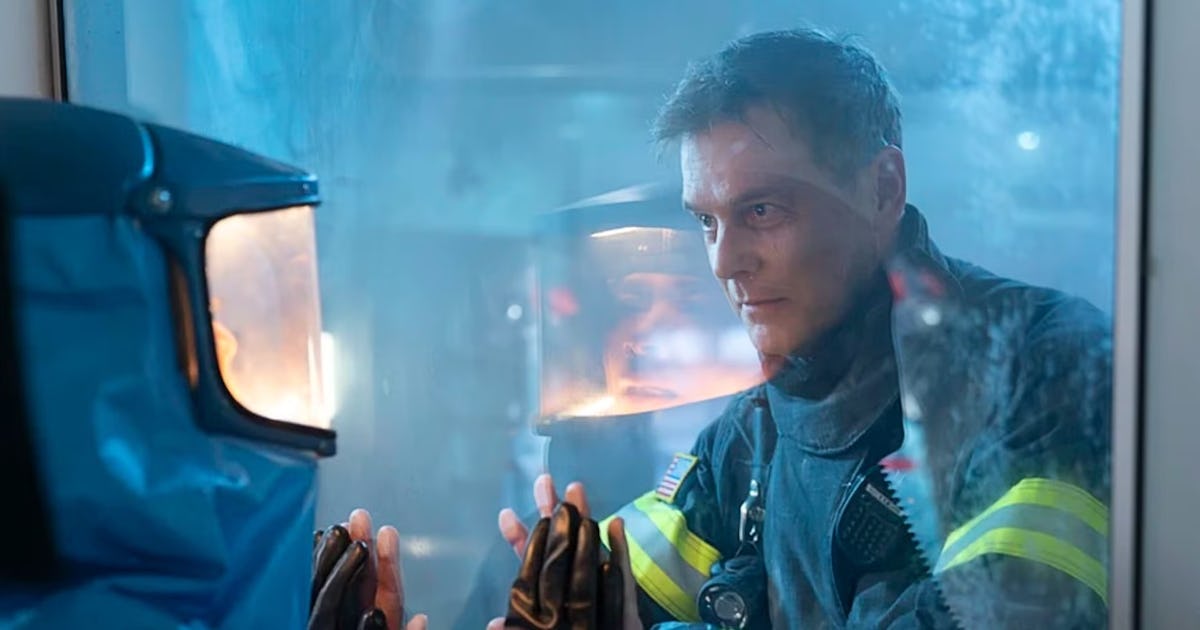
By no means in my life have I cried extra over fictional characters than I’ve watching TV in 2025. I gained’t spoil it for these of you who nonetheless must atone for present seasons, however suffice it to say a few of the hottest collection proper now have killed off characters that we’ve all come to know and love over time: 9-1-1, The Final of Us, 1923, Legal Minds, Handmaid’s Tale… the listing truthfully goes on and on. You’ve been warned.
However late one night time, once I actually wakened (and terrified) my sleeping husband with the sounds of my sobs as yet one more fictional bestie bit the mud, I questioned… is that this regular? Why can we — aka undoubtedly me — get so invested in fictional characters, and what does it say about us?
To seek out out, I reached out to specialists within the discipline of psychology, psychiatry, and even bibliotherapy. Right here’s what they revealed about these parasocial relationships.
What are “parasocial relationships”?
In response to Dr. Charles Candy, a Johns Hopkins-trained board-certified psychiatrist and medical advisor for Linear Health, “Parasocial relationships describe the one-sided connections we develop with folks or characters who don’t know us. Whereas these bonds are usually related to celebrities or influencers, they lengthen to fictional figures in books, reveals, and films.”
Our brains typically understand actual and imagined social relationships in the identical method, explains Candy. “In reality, the limbic system, which helps us course of feelings, can mild up in related methods as after we’re watching a buddy endure — but it surely’s solely a beloved character getting minimize off the present.”
So, sure, caring for fictional characters could be categorized as a parasocial relationship. And, don’t fear, says Candy: “It’s utterly regular, particularly with how a lot the media has formed our era.”
Why do fictional characters pull us in, although?
Logically, I do know these aren’t actual folks. I do know they aren’t really dying. However however, I typically really feel that very same bodily pang in my coronary heart when it occurs — and I’m guessing that’s true for you, too.
As a psychiatric nurse practitioner at Savant Care, Shebna N. Osanmoh typically observes these profound connections between sufferers and the tales and characters they encounter in books, movies, or TV reveals. It reveals a number of issues about our interior world, he says, like our capability for empathy and creativeness.
“It reveals that we’ve got the capability to care about another person’s properly‑being, even when they’re fabricated from ink or pixels. When you end up rooting for a personality’s triumph or feeling heartbroken at their loss, you’re exercising — and certain strengthening — your empathic muscular tissues,” Osanmoh says.
These fictional relationships additionally faucet into our want for which means and connection. “Tales assist us make sense of our personal lives,” Osanmoh says. “Seeing a personality overcome adversity can mirror our personal struggles, giving us hope that ‘if they will do it, so can I.’”
And fiction provides us area to really feel large emotions with out large penalties.
“Fiction gives a threat‑free surroundings to really feel anger, disappointment, pleasure, or worry. You possibly can cry for a personality’s loss with out it threatening your actual‑world equilibrium. You possibly can have fun their victories with out actual‑world stakes,” says Osanmoh, including, “For instance, consider the outpouring of grief when a significant character dies on a protracted‑working TV present (e.g., Jon Snow in Recreation of Thrones). Tens of millions worldwide shared shock, sorrow, even disbelief — proof that these connections are real emotional experiences.”
What are bibliotherapy and cinematherapy, and the way do they slot in right here?
Fiction… as remedy? That’s a factor? It positive is. Simply ask LiterapyNYC founder Emely Rumble, a licensed medical social employee and bibliotherapist who’s spent over 14 years finding out and working towards how literature can function a strong software for emotional therapeutic.
“After we deeply join with a fictional character, we’re typically partaking in what’s referred to as the bibliotherapeutic course of — particularly, a sequence of recognition, examination, juxtaposition, and software,” explains Rumble, who additionally authored Bibliotherapy in the Bronx. “First, we acknowledge elements of ourselves in a personality. Then we study our emotional responses, evaluate and distinction our lives with theirs, and at last apply any insights gained to our personal therapeutic or progress.”
Bibliotherapy (and cinematherapy, with movie and TV) includes making use of these rules as a part of a therapeutic apply.
“As a bibliotherapist, I deliberately ‘guide match’ shoppers with texts designed to elicit this sort of emotional resonance. The protection of fiction permits readers to simulate social experiences and apply cognitive and emotional responses with out real-world penalties — a type of emotional gown rehearsal that may be deeply cathartic,” says Rumble.
It reveals that we’ve got the capability to care about another person’s properly‑being, even when they’re fabricated from ink or pixels.
This emotional connection helps folks really feel much less alone of their struggles. It additionally permits us to discover our journeys and challenges “in a method that gives us with emotional readability we would not have entry to in any other case (particularly in a society the place entry to psychological well being companies is proscribed).”
Rumble cites two latest examples for instance what bibliotherapy seems to be like in apply.
“I just lately labored with a teen navigating id growth and social nervousness. Collectively, we learn sections of Felix Ever After by Kacen Callender in session. The character’s journey gave my shopper permission to discover their very own emotions round gender id and belonging,” says Rumble, noting that she paired the studying with a writing train: a letter from Felix to themselves. “This helped my shopper externalize the self-doubt they’d been carrying.”
For one more shopper grieving the sudden lack of their sister, Rumble beneficial The Year of Magical Thinking by Joan Didion. “We used chosen passages as entry factors for journaling and therapeutic dialogue in our classes. This helped me to create an area for my shopper to course of grief, difficult feelings, and to revisit traumatic reminiscences with out strain or disgrace.”
So, parasocial relationships with fictional characters are wholesome?
The specialists agree: sure!
“Surprisingly, these connections can really be fairly wholesome. For a lot of, particularly those that are extra introspective, fictional tales can present a protected area to discover tough feelings like grief, worry, or vulnerability,” says Candy.
Rumble elaborates, “These parasocial connections with fictional characters typically act as stand-ins when real-life relationships really feel too fraught or absent. They permit folks to discover their ache via the lens of story, which might make overwhelming emotions extra accessible.”
It helps, she says, that there’s no exterior social judgment when somebody displays via a personality or story. This makes it simpler for feelings to “rise to the floor, the place they are often witnessed, felt, and launched.”
The one caveat: Like most issues in life, parasocial relationships are greatest while you don’t go overboard.
“Sparsely, these attachments can function a buffer for loneliness and even mannequin more healthy coping methods,” says Candy. “And our brains are solely doing what they’re wired to do: search connection, apply empathy, and make which means via tales. The hazard comes solely when the parasocial world begins changing real-world interplay fully. Like the rest, it’s about having stability.”
Trending Merchandise