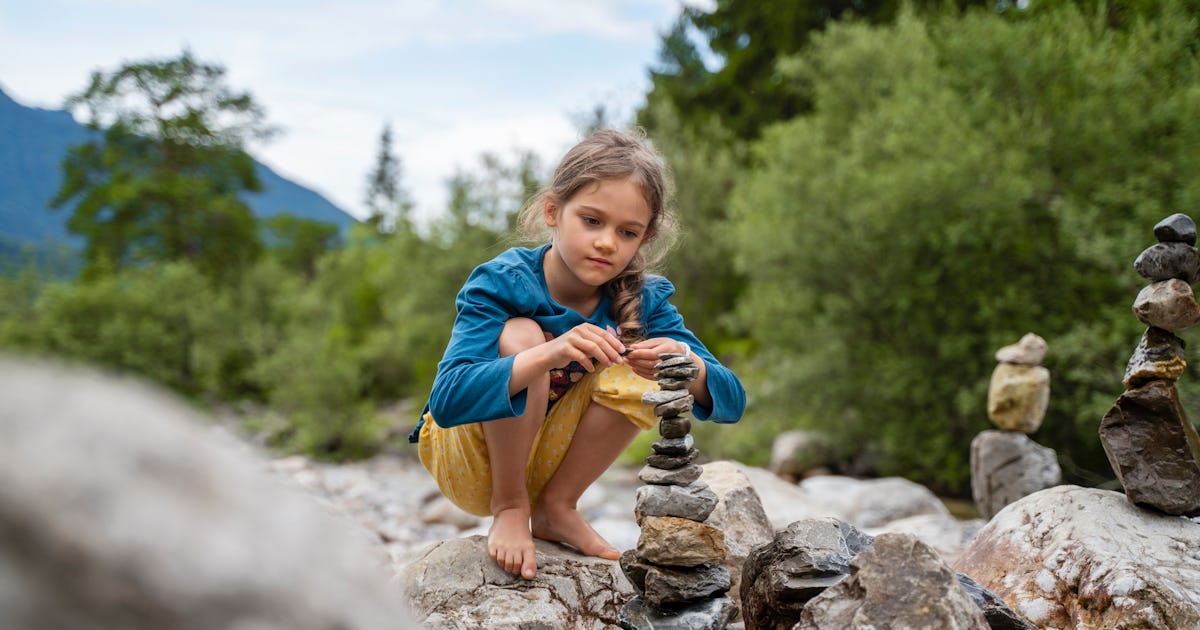
It’s solely pure for little ones to wish to explore every curiosity they arrive throughout on the path — and no secret that youngsters like to stack something they will get their arms on. Appears innocent sufficient, proper? Not fairly.
At first look, permitting your youngsters to make stacked stones whereas hiking as a family might appear to be a enjoyable outside exercise. Nonetheless, encouraging your little ones to stack or transfer rocks outdoor might have extreme ecological impacts. When your baby pulls stones from the bottom, they’re unknowingly damaging habitats and disrupting ecosystems.
It’s not simply youngsters doing the disrupting, both. Adults wish to stack rocks as a meditation observe or to problem their potential to make the unattainable potential by balancing them good so the tower of stones does not collapse. However earlier than you do, it’s value contemplating the ripple impact: Stacking rocks can hurt ecosystems, endanger hikers, disturb wildlife, and disrespect cultural heritage.
You know the way the saying goes, although: After we know higher, we do higher. In that spirit, let’s take a more in-depth have a look at why this habits shouldn’t make your summer activity agenda.
Shifting rocks disturbs fragile wildlife habitats.
These stone piles are often known as cairns — from the Gaelic phrase which means “heap of stones.” Constructing them can erode soil and disrupt fragile habitats, particularly when the bottom beneath is uncovered. “Each time we transfer a rock, we’re disrupting the setting by displacing established biology and expediting change that crops and animals should then exert power to adapt to,” Travis Puglisi of Wandering Mojave Hiking Services says.
Rocks are dwelling to every part from reptiles to bugs to tiny microorganisms. After we transfer rocks, we displace all types of tiny creatures — from lizards and bugs to aquatic life — and upend the fragile stability of their setting. In rivers and streams, transferring rocks might alter the ecosystem for aquatic creatures and negatively impression their meals sources. Very similar to collecting seashells is a hazardous hobby for marine life, disturbing rocks can destroy animals’ houses.
Backside line: Stacking rocks is not planet-friendly and goes immediately towards leave-no-trace rules.
Park rangers use stone cairns to mark mountain climbing trails to forestall folks from getting misplaced.
“Rocks mark sacred websites, trails, protected routes by boulder-clogged canyons, and campsites. These cairns talk messages between folks and time,” Puglisi says. “Such stone markers level hikers in the appropriate route, significantly ones that function guiding alerts on difficult terrain. When folks make their very own rock stacks, the unique which means of the stone marker is misplaced. In distant areas, this may result in lack of life.”
When there are quite a few rock stacks, it endangers others who depend on the real cairns ought to they lose monitor of the path. Rock stacks left behind by civilians may lead hikers off established trails and into hazardous areas. Keep away from including rocks to current stacks, as it might make them unstable and topple.
It hinders others’ expertise of the nice outdoor by disrupting the undisturbed pure magnificence.
“After we muddle an setting with non-functional rock stacks, we devalue intentional imagery,” Puglisi says. “Making rock stacks for enjoyable produces visible air pollution that devalues different deliberately positioned rocks.”
In some parks, stacking rocks isn’t simply discouraged — it’s unlawful.
Cairns could also be thought of vandalism or desecration of pure or cultural websites. Rock-stacking in lots of U.S. Nationwide Parks is punishable below laws that protects the wilderness towards vandalism and littering.
Cairns aren’t for us, and that’s OK.
For some cultures, rock stacking is sacred. In these communities, it’s a deeply rooted custom that deserves respect. Environmental activism should not goal Indigenous communities which have a non secular custom of rock stacking; Buddhists, who’ve a storied historical past of utilizing this observe to stability power; or Jewish folks, who go away rocks on tombs to honor the deceased.
However for the remainder of us, there are many extra acceptable and fewer dangerous methods to assist our children engage in nature this summer time. Problem your child to seek out numerous colours, shapes, and textures in nature; search for animal tracks; or attempt to identify bird calls — all hands-off but nonetheless participating actions that train youngsters to respect and honor nature.
Trending Merchandise