There are few issues I cherished extra as a child than analysis. I can particularly keep in mind pulling out the “V” e book of the early Eighties encyclopedias my mother and father had on a bookshelf once I wished to study extra about volleyball. I learn something I might get my fingers on, and the previous few pages of the American Lady books — the place it dove into the actual historical past of the time and details about historic occasions talked about within the e book — had been all the time my favourite. I used to be a curious kid, and with the ability to flip to books (and later, the web) to look issues up felt so good.
As a mother or father, that pleasure hasn’t gone away, and I really like nothing greater than my three daughters arising with questions on animals, historical past, hobbies, no matter, and asking me for extra data. You’d assume that with a lot data at our fingertips now, it will be even simpler to analysis, however the reality is, it feels more durable than ever. The web is solely not the most effective place for teenagers to search out data today. Between AI-generated summaries, revealed misinformation, and a deep web effectively that may lead children farther and farther from what they really wished to know (usually ending up in a spot they aren’t prepared for), many mother and father are blocking Google and search engines like google fully from children’ gadgets.
There’s additionally the difficult “prompt gratification” that so many people mother and father try to steer our youngsters away from. From with the ability to select the precise episode of a present they need proper now to having an thought for a pastime and with the ability to buy every little thing with one click on — and have it arrive in your doorstep inside hours — we appear to have misplaced the thought of ready for data.
And in a world the place it’s so fast to show to our telephones and get a solution — any reply — the thought of switching to extra analog analysis concepts feels unattainable. It’s like wanting your children to have an iPod, however realizing the know-how doesn’t exist the way in which you need it to anymore. How will we satiate our youngsters’ curiosity with out counting on our Amazon gadgets or AI or Google?
“Reply the query with extra questions,” Shara Arora, govt director of two Montessori faculties in Texas, tells Scary Mommy. “When children ask a query, don’t lookup the reply instantly. As a substitute, use open-ended inquiries to encourage problem-solving, like ‘What do you assume?’ or ‘What will we already find out about this matter?’” From there, children can use their very own crucial considering abilities and creativeness to surprise concerning the query earlier than they ever get to researching. And when it’s time to look one thing up? Libraries are nonetheless out there.
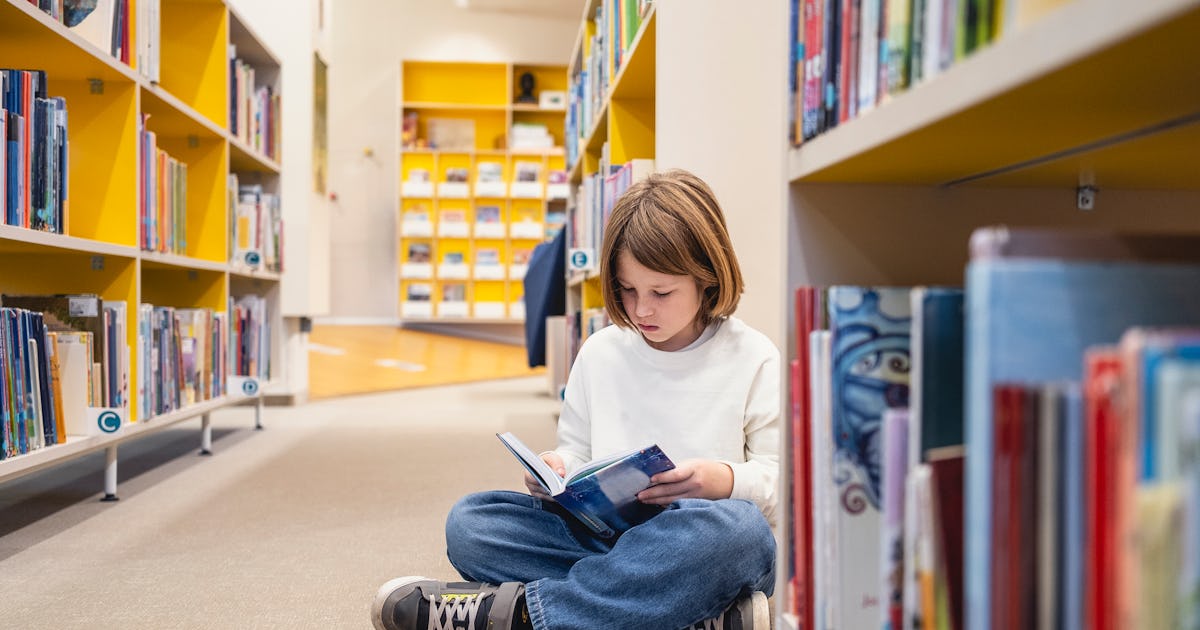
Go to the library.
“We’ve forgotten what an unbelievable useful resource they’re,” Greer Bradshaw, an elementary college instructor for 20 years, tells Scary Mommy. “Most houses today don’t nonetheless have encyclopedias, and ordering books off of Amazon simply fuels extra of that overconsumption and prompt gratification factor, however the library is free and full of data. Children can discover issues themselves, they’ll take a look at books, they’ll dive as deep as they need into any topic and are available out the opposite facet figuring out they acquired precise details and data they’ll belief.”
Bradshaw says so many individuals, mother and father and children alike, have instructed her that they really feel like libraries are outdated. However once you actually digest some data — whether or not your child desires to find out about volcanoes or the primary Tremendous Bowl — a lot of what you discover on the web is the fundamental details you will discover in any e book or encyclopedia (they’ve simply been loaded up with search engine marketing key phrases and chatter for higher looking out).
“There are such a lot of kid-friendly nonfiction books and encyclopedias out there on all types of matters. A couple of favorites embrace Eyewitness Encyclopedia of Every thing: The Final Information to the World Round You, Nationwide Geographic Little Children First Huge E-book of How, and The Fascinating Animal E-book for Children,” recommends Arora. “Bodily looking out by way of books slows children down and makes studying really feel extra intentional.”
And don’t overlook how necessary studying is, in any capability. A lot of my very own information of issues got here from what I learn in books, and taking your children to the library usually to take a look at new books can open up an entire new degree of empowerment and knowledge for them.
Discover an skilled at a retailer, museum, or heart.
For teenagers who’ve an curiosity in one thing broad and particular — like what it was wish to be a child in World Conflict II or methods to care for a guinea pig — reaching out to your precise group and discovering somebody who can share that data is priceless. Hit up your native museums, facilities, and even golf equipment to see if somebody can reply your child’s questions. In case your child is inquisitive about what all it entails to have a pet hen, head to the native pet retailer and ask the workers there. In case your youngster’s fascinated with trains, go to a prepare museum close to you or take a trip on one. If your loved ones desires to know extra about how your hometown got here to be, your library and Metropolis Corridor generally is a wealth of data.
Digging for information like this may additionally assist children really feel a bit like a detective, and there’s one thing so enjoyable about digging into every little thing they need to know with precise locations and bodily objects.
Keep in mind, data could be overwhelming.
The opposite day, I went to hard-boil some eggs and remembered that there was some new “hack” for making excellent hard-boiled eggs. I couldn’t keep in mind if I noticed it in an Instagram reel or a Fb put up or a e-newsletter, so I Googled. I instantly grew to become overwhelmed. There have been hundreds of thousands of outcomes for the “excellent hard-boiled egg,” and I panicked. Everybody had a distinct method: Some stated seven minutes, others stated 10. I used to be about to surrender once I took a breath, remembering I’ve a minimum of 15 cookbooks on a shelf.
I opened up a primary one — one I acquired as a Christmas reward once I was a child — and located a fast “recipe” for hard-boiled eggs. And you realize what? It labored like a attraction.
“It is a nice instance of why we don’t have to overload ourselves with data,” Bradshaw says. “It’s one factor to need to discover a recipe or determine one thing out; it’s one other to emphasize ourselves out considering we’ve to search out the greatest recipe or the greatest technique to repair one thing.” It’s necessary to recollect as we analysis, particularly children, that it’s OK to not have the entire data, so long as you’ve discovered what you had been searching for.
And it’s OK to proceed to surprise and ideate and take into consideration solutions.
In case your youngster desires to know extra about giraffes, going to the library and selecting up a e book about giraffes will give loads of data. But when your form finds themselves inquisitive about whether or not or not a giraffe will get uninterested in consuming leaves, it’s an ideal alternative to proceed a dialogue as a substitute of turning to AI or your Alexa device.
I do know; you’re drained and overstimulated and actually simply need your child to cease asking questions (and “do giraffes get uninterested in consuming leaves” appears like one thing hilarious to ask your Echo machine), however that is the form of factor children ought to maintain occupied with, determining a solution on their very own. It’s an opportunity for them to share what they’ve realized about giraffes — their consuming habits and behaviors — and the way it will have an effect on their desire for leaves or their emotional response to consuming one thing time and again.
We need to give children instruments to determine issues out, not simply slide them the solutions time and again. And Arora says it’s necessary to normalize not figuring out every little thing. “That is the age when children are filled with questions. My children usually stump me, and I’ll say, ‘That’s an ideal query. I don’t have the reply, however perhaps we will determine it out or find out about it collectively.’ This exhibits them that even adults don’t know every little thing, and that’s OK. We’re all all the time studying.”
Truthfully, what number of occasions have you ever looked for one thing and the reply from the web or a TikTok or no matter is principally, “We will’t make sure, however we expect it’s yadda yadda”? what? Children — and adults, for that matter — can give you their very own yadda yaddas.
Do hands-on analysis.
For teenagers who need to seek for methods to do or repair one thing, Arora says it’s additionally very important to recollect the significance of hands-on analysis. “As a substitute of trying issues up straight away, encourage children to experiment, construct, check concepts, and retool when one thing doesn’t work. It’s a lot extra satisfying to determine one thing out than to search out the reply in Google.”
And for these fleeting ideas that cross your child’s thoughts once you’re away from the library or don’t have a possibility to look in a e book or watch a documentary simply but, it’s good to simply write them down in a notepad and save them for once you may give them your full consideration. As a result of we’ve such fast entry to data, it makes it simple to simply search one thing instantly, learn the reply, after which have it depart our brains simply as rapidly. By being intentional with our analysis and making a plan to look one thing up once we may give it our full consideration, it may open up our minds to soak all of it in a bit extra… and have a extra lasting impression.
Know-how isn’t going away, and naturally we do need our youngsters to have the ability to use it as a software once they want it. However by discovering different avenues to satiate their curiosity, we might help them be smarter with know-how, too. “In our fast-paced, prompt gratification world, it’s good to decelerate. Actually, educating kids to analysis by way of books and experiment on their very own will assist them be extra considerate and demanding when utilizing Google or AI,” says Arora.
So lookup books, discover documentaries, ask native consultants — and by no means cease encouraging your youngster to reply their very own questions. The extra we will encourage our youngsters to dig for his or her data as a substitute of studying the primary AI slop abstract that pops up, the extra seemingly they’re to turn into crucial thinkers. And the world wants much more of these.
Trending Merchandise