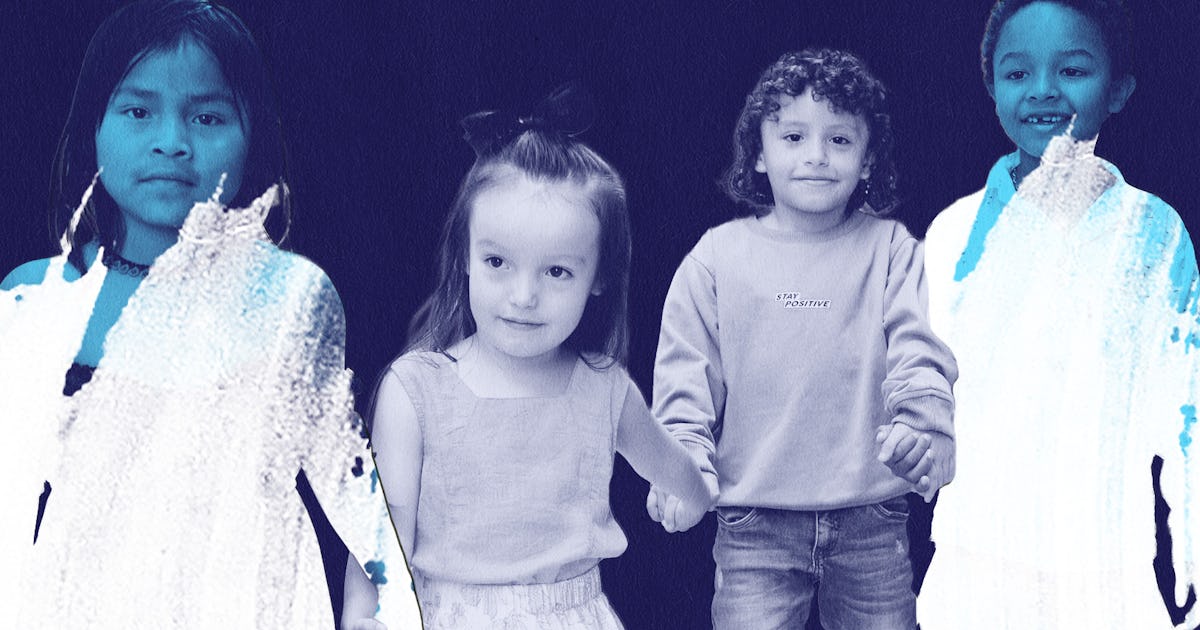
We train our children all types of issues. How you can tie their footwear. How to ride a bike. How you can say “please” and “thanks.” How you can swim. Parenting is an infinite loop of classes — many sensible, some even foolish. However then there are the big things, those that actually form our children’ humanity. We train them to deal with folks with dignity and respect. We train them that each particular person’s story issues. And after we ship our children to highschool, we hope these classes might be strengthened within the classroom.
Sadly, that’s not at all times the case.
Lecturers do a lot, in fact. We love and appreciate them for it. Nevertheless, in at this time’s local weather, lots of them are additionally working inside quickly narrowing boundaries: censored studying lists, sanitized curricula, and insurance policies that search to strip colleges of the range that displays the world our children stay in.
So, if our colleges are now not ready — or allowed — to show the complete story, then we, as dad and mom, should. To assist information us in changing into the co-educators our children deserve, Scary Mommy reached out to specialists for his or her actionable recommendation and perception.
The Curriculum Is Shrinking, & Children Really feel It
In additional methods than one, children are shedding entry to range and inclusion within the classroom. This systemic erasure is occurring by means of anti-DEI policy, with a stark instance being the greater than 10,000 book bans in public schools — which goal books by authors of shade, by LGBTQ+ authors, and by girls, in addition to books that critically heart race, gender identification, and immigration by means of historical past.
Which means, even once they need to train inclusively, educators are sometimes restricted by district coverage or new laws. And that leaves an enormous hole — one which’s shaping how our children see the world and one another.
Pen America’s list of 2025 banned books alone consists of coming-of-age cult favorites like The Perks of Being a Wallflower by Stephen Chbosky and The Kite Runner by Khaled Hosseini, together with classics like The Coloration Purple by Alice Walker.
“We’re seeing a scientific try to limit entry to historical past, identification, and distinction,” confirms Elika Dadsetan, govt director of Visions, Inc., an organization centered on strengthening cross-cultural connections and growing inclusivity. “These efforts don’t simply restrict what’s taught; they distort younger folks’s understanding of the world and who belongs in it. The erasure of numerous narratives breeds concern and division as a substitute of empathy and reality.”
The fact, says Dadsetan, is that illustration shouldn’t be seen as a “bonus” as a result of it’s foundational. “When kids don’t see their households, cultures, or identities mirrored, or once they’re informed these facets are controversial or inappropriate, the hurt is profound,” she says.
“Kids be taught not solely from what we are saying, however from what we keep away from. When race, queerness, incapacity, or distinction are censored, it teaches disgrace. We see the emotional toll in greater charges of tension, internalized bias, and even disconnection from college. And when range is embraced, we see extra resilient, related, and critically engaged youth.”
Maaria Mozaffar, legislative legal professional, mom, and knowledgeable on coverage and cultural dehumanization, agrees that kids profit most from a classroom schooling when it consists of an correct international historical past and reflection of the world’s range.
“The curricula which are particularly designed to open dialogue on vital factors in international historical past train humility and an appreciation of nuances. In a world the place revisionist histories are so simply out there, a give attention to factual international historical past is vital,” Mozaffar tells Scary Mommy. “You’d be shocked how little the typical baby in our nation is aware of in regards to the world, geography, and its historical past. That is such a disservice to the approaching technology.”
Among the many many advantages that come from a toddler receiving an schooling that embraces range (each in curricula and surroundings) is a way of assurance.
“Elevating a toddler to search out the world stunning and its range beneficial is a treasured duty. To tackle the duty is so worthwhile for every kid’s shallowness. A baby who is aware of that the world and its individuals are there for them to find and be taught from provides a spot to the kid of their world,” says Mozaffar, including that, in a refined manner, this additionally “addresses racism, colonialism, and allyship in elementary steps that enable kids to be awake to the fantastic thing about folks in addition to the hurt that some folks trigger attributable to ignorance.”
And children are good, you understand? They acknowledge when one thing’s lacking. When colleges go silent, the messaging that “completely different is harmful” or shameful will get louder.
Elevating Inclusive Children Begins at House
The excellent news is we, as dad and mom, can fill within the gaps. These conversations can occur within the automobile, on the dinner desk, during a Costco run.
Dadsetan says it may be so simple as curating liberatory studying (“select books, exhibits, and tales that heart numerous voices throughout race, gender, potential, language, and extra”), speaking to your children about censorship and different robust topics (“children can deal with arduous subjects after we converse with honesty and care”), and modeling what it means to belong.
Mozaffar emphasizes the vital significance of the modeling half, noting that discrimination and bigotry will not be inherent to human nature — these behaviors are discovered fashions which are nurtured. “So many people don’t admire how a lot consideration kids pay to conversations round them and what number of social actions they understand as permissible as a result of their family members follow them,” she shares.
So, yeah, a guardian’s precise position modeling is tremendous beneficial. “Growing relationships with households which are completely different from your personal, making an attempt new cuisines, watching overseas household exhibits on Netflix, studying international authors, and, when potential, touring internationally — or, if not potential, visiting numerous communities round you — is impactful,” Mozaffar reminds us. “You’re the greatest instance in your baby.”
Dadsetan additionally recommends defending academics whereas urgent techniques: “Be part of college board conferences, advocate for inclusive curricula, and type alliances with different households, with out scapegoating educators who could also be constrained.”
Alethea Dunham-Carson, assistant head for educating and studying on the progressive, unbiased Gordon School in East Windfall, Rhode Island, reinforces the concept that dad and mom can help inclusive studying inside and out of doors of the classroom by getting concerned and talking up.
“As an schooling skilled, I can inform you that folks’ voices are extraordinarily highly effective in a faculty. Be your self and converse from what you understand. Faculty board conferences, again to highschool nights, city conferences — these are locations to be current and be seen,” she says. “In the event you inform the story of your loved ones, and your baby, and clarify what you need in your baby in an sincere and clear manner, you’re performing an unimaginable service to the academics in your kid’s life.”
At house, she says, your baby wants reassurance.
“It’s essential that your baby is aware of that they’re secure. They should hear that you’ve their again. They should know that you’ll at all times advocate for a world the place nobody will have the ability to cease them from loving who they love, from admiring whom they admire, and from dreaming of the way they need to assist make the world higher. They need to have the alternatives to witness that you really want these experiences not just for them, however for everybody.”
And in the case of bearing witness, it’s additionally necessary for folks to do not forget that children at this time are all-too-often seeing and listening to heartbreaking violations of inclusion.
Elaborates Dunham-Carson, “Households are dealing with actual dangers associated to identification: the deportation of a beloved one, a risk to well being care for somebody who wants it, an undermining of a wedding or loving relationship, a lack of a job attributable to authorized standing. Between their household, their buddies and their schoolmates, your baby goes to know somebody who’s touched by these threats.”
So, greater than ever, children want us to (a) acknowledge the tensions that could be current at college, church, or the playground, and (b) see us standing up for what we consider in — “even with one thing so simple as an indication in your window or a sticker in your automobile.”
Inclusion Is Multilingual
One other manner to assist reinforce range in your house is thru language — an often-overlooked facet of elevating globally minded, inclusive children. Doing so expands the dialog past even race and gender and into cultural literacy.
Esteban Touma, a language instructor and cultural knowledgeable at Babbel, explains why language is such a strong instrument for fostering empathy and cultural understanding in kids.
“By design, language studying places you in another person’s footwear — whether or not it’s somebody who speaks the language fluently or somebody simply starting to be taught yours. It fosters humility, curiosity, and connection,” Touma tells us. “Language has at all times been certainly one of humanity’s oldest and strongest connectors. The hassle of studying and talking one other language, even imperfectly, is an indication of respect, and it deepens mutual understanding in a manner few different issues can.”
Touma factors out that we’re additionally residing in a brand new period, the place international popular culture shapes how children have interaction with the world. “From Dangerous Bunny’s rise to the worldwide recognition of Ok-pop and Manga, foreign-language leisure is driving curiosity and motivation,” he says. “Children aren’t simply studying language for a grade; they’re studying it to attach with the tales, music, and tradition they love. And that emotional connection is commonly what sparks actual empathy and cultural appreciation.”
Accordingly, language schooling — or slightly, the shortage of it — contributes to the broader challenge of cultural erasure in U.S. colleges.
“Whereas English is, in fact, essentially the most extensively spoken language within the U.S., practically 68 million folks converse a language aside from English of their houses. If language isn’t a part of the curriculum in colleges, it’s virtually a assure that the one manner a toddler will be taught a brand new language is that if it’s already spoken at house or in the event that they go to a non-public college,” Touma says.
Once we don’t prioritize language studying, he underscores, “We miss an enormous alternative to assist children develop up extra open-minded, empathetic, and globally conscious.”
The Classes Reside With Us
The significance of educating our youngsters about range — and offering them with an surroundings that emphasizes it — can get misplaced in broader arguments about “buzzwords” and “agendas” and the murky waters of political redirection. That’s why the onus is on dad and mom to carry the throughline. In any case, there’s so much to lose right here.
“Once we erase distinction, we don’t create security, we create silence,” laments Dadsetan. “Silence that harms LGBTQ+ children, BIPOC college students, kids with disabilities, and any baby studying to make sense of their identification. What’s really at stake is belonging, and that’s what kids want most to thrive.”
That is why, emphasizes Mozaffar, the position of the guardian is so very important.
“Maybe the largest worth we will train our youngsters to assist them admire range is empathy. We’re all the identical in some ways, however we’re additionally undeniably completely different. The wonder lies in our potential to attach by putting ourselves in others’ footwear and appreciating our shared values. Understanding how one feels creates human connection and expands our humanity,” she says. “If we train this early to our youngsters, they’ll at all times analyze battle and variety from a human perspective, releasing them from being prone to false narratives that divide us.”
Finally, our children might not keep in mind each reality or method they be taught in third grade. What they’ll keep in mind are the values we taught them across the dinner desk, within the automobile, and thru the behaviors we mirror for them. Variety isn’t a pattern, and it shouldn’t even be an “choice” in school rooms; it ought to be the usual.
Trending Merchandise