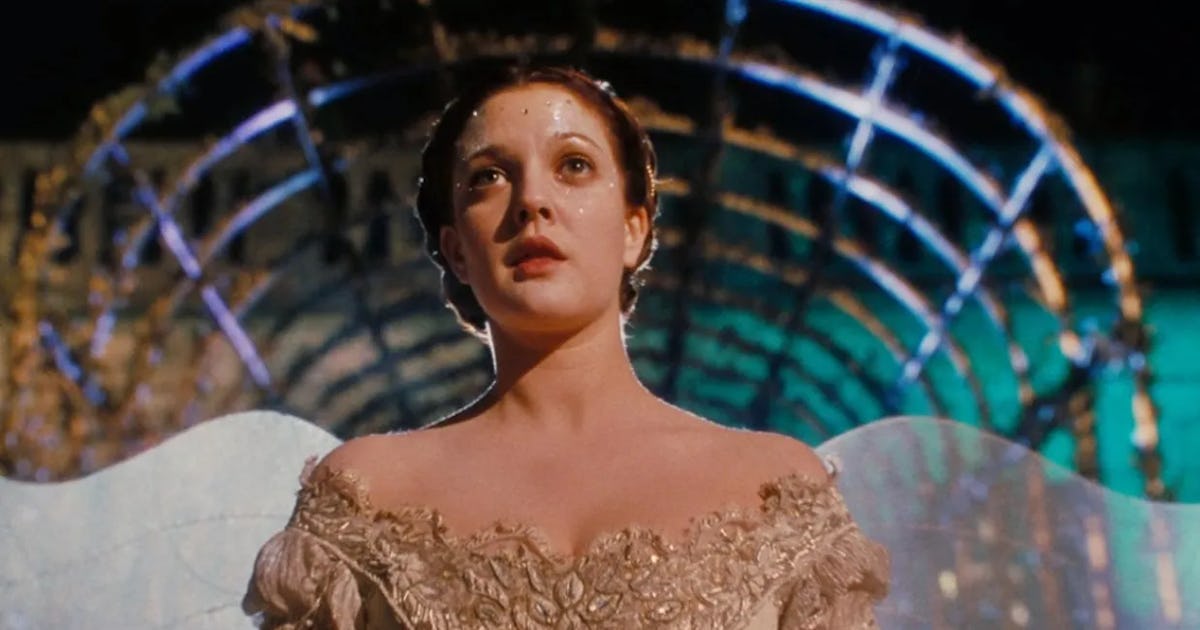
Everybody loves , old school fairy tale. There’s simply one thing euphoric about escaping right into a fantasy world, leaving your whole real-life issues behind, and immersing your self in a spot the place something is feasible. To not point out, there are the entire essential life classes that fairy tales can educate us as effectively: be cautious of strangers, be type to others, don’t contact sharp, pointy spindles on spinning wheels. (OK, that final one ought to kinda go with out saying, however you get the thought.) And whereas there have been many (many, many) live-action adaptations of various Disney classics all through the years, one in all my all-time favorites needs to be the 1998 film Ever After, which presents a singular, historic depiction of the story of Cinderella.
Starring Drew Barrymore within the titular position, the film takes place throughout the French Renaissance and follows the journey of a younger woman who’s compelled into servitude by the hands of her merciless stepmother within the wake of her father’s demise. Many elements of the story parallel its animated counterpart, besides in a single very large approach: zero magic is concerned. There’s no fairy godmother, no pumpkins turning into carriages, no mice morphing into human kind — the supernatural components of the story are all gone. However whereas that change-up could initially sound like an enormous mistake, I’m right here to argue that the shortage of magic truly works on this movie’s favor.
It’s Extra Relatable
Magic is nice, however given its lack of existence in the actual world, it’s not one thing audiences can actually relate to as a result of we now have no firsthand expertise with it. That’s an enormous a part of what makes it so thrilling, however it could actually additionally create a distance between the viewers and the characters since we are able to’t absolutely perceive what they’re going by means of. However Ever After adjustments that dynamic. As a substitute of introducing supernatural elements to the story, it dives into extraordinarily relatable matters like love, friendship, grief, and jealousy.
Within the animated iteration of Cinderella, we’re given zero info as to why the evil stepmother is so merciless to her type and caring stepdaughter. I all the time wrote it off as if she had been merely a mean-spirited individual. Finish of story. Nevertheless, Ever After means that there’s extra to this girl than meets the attention. She’s nonetheless merciless, but it surely seems to stem from grief and jealousy — grief over the lack of her husband, whom she truly appeared to like, and jealousy over how far more he appeared to like his daughter than her. It doesn’t excuse her conduct or actions by any means, but it surely positively helps to elucidate her motivations and provides the character some depth. It doesn’t make me like her, but it surely additionally doesn’t make her hate her fairly as a lot, which one may argue is a sort of miracle in itself.
Magic Is Enjoyable, However Can Be Distracting
So lots of in the present day’s live-action depictions of Disney movies contain some sort of magical component. Ursula performs a magical spell to offer Ariel legs and steal her voice in The Little Mermaid; the younger prince and his servants are positioned underneath a curse by an enchantress in Magnificence and the Beast; Aladdin befriends a genie and magic carpet. I may go on and on. And although these mystical elements are enjoyable and thrilling, they can be used as a crutch at instances, leaving much less room for character growth and deeper storylines, as I discussed earlier concerning the evil stepmother.
Granted, you would argue that these are child movies and don’t essentially want deeper meanings to be fulfilling. And also you’re proper. However that doesn’t imply that each depiction of each Disney movie has to observe that magic-centric formulation. As a result of typically an underlying message or lesson could be simply as significant, if no more so, than supernatural hijinks.
It Proves That Typically Actual Life Can Be Simply As Magical
I’ve all the time loved sure elements of Cinderella, however one a part of the story by no means sat effectively with me: how the prince may solely work out who Cinderella was by having her foot match into the glass slipper. Was this man’s reminiscence so horrible that he actually couldn’t slender it down higher by himself? I’m sorry, however that’s an instantaneous crimson flag for me, my good friend. Him not having the ability to acknowledge the lady he supposedly fell in love with if she’s sporting rags as a substitute of a ballgown kinda takes away a few of the romance from the scenario, to be trustworthy. However Ever After skips over that nonsense. His lack of ability to acknowledge her because the servant who threw an apple at him at first of the movie is less complicated to digest because it highlights the unfairness in school construction that existed throughout that point. (Royalty would by no means look a servant within the eye.)
Positive, the shoe nonetheless will get left on the ball, but it surely isn’t used as a way for Henry to search out her. He slips it on her foot on the finish as a approach of exhibiting his dedication to her and accepting her because the robust, unbiased, free-thinking girl that she is. That’s a lot sexier than haphazardly shoving a slipper on any/each girl’s foot within the kingdom.
Ever After manages to be fascinating all by itself with out all the opposite bells and whistles, proving that you simply don’t want magic to create a fairy story masterpiece and ship a fortunately ever after.
Trending Merchandise